The Yard, The Sparkly Hat, and The Doomsday Clock
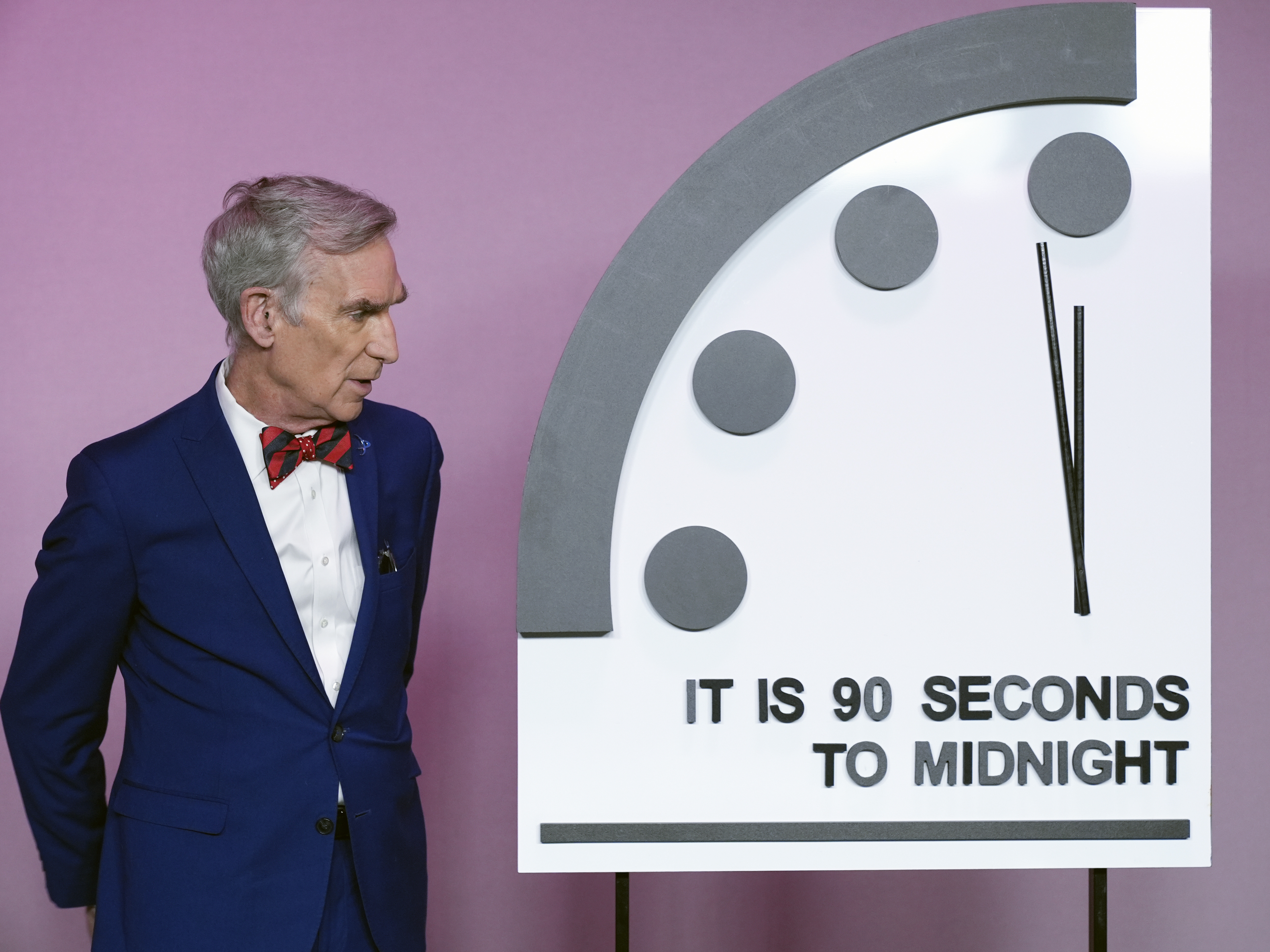
The Doomsday Clock
Summary
Most AI doom talk comes from people with money on it. The industry titans hype their own power, and a handful of obscure nonprofits forecast the apocalypse to keep the donations rolling in. What caught my attention were three writers standing outside both rackets.
Freddie deBoer plays the skeptic and mocks the whole thing with his "Shitting-in-the-Yard Challenge." Scott Alexander, a rationalist, takes MIRI's doomsday math and turns it into a toddler behind the wheel of a Ferrari. Daniel Kokotajlo walked away from millions in OpenAI equity to warn about a 2027 AGI arms race.
None of them agree on what's coming, and they'd probably argue about it for hours. But they land on the same worry: our institutions and incentives aren't ready for what we're building. When three people with nothing to gain point at the same spot, I pay attention, even if they can't tell me exactly what's wrong.
Kevin Roose sits in his Manhattan apartment, apparently convinced ChatGPT matters more than fire. A former OpenAI researcher in California can't sleep over what he thinks 2027 holds. And Freddie deBoer stands in his backyard with a shovel, daring any AI maximalist to come dig the latrine they'd need if they actually believed their own press.
The one thing they agree on is that the gap between what's promised and what's real has never been wider. deBoer's "Shitting-in-the-Yard Challenge" puts it plainly: if LLMs really beat indoor plumbing, electricity, or fire, the way Sundar Pichai keeps saying, you'd trade your toilet for ChatGPT tomorrow.
"I don't believe that it's coherent to insist that the development of LLMs is more important than humans harnessing fire or electricity... while being unwilling to trade access to LLMs for access to indoor plumbing."
Scott Alexander reads about our impending doom while deBoer builds his imaginary outhouse. He agrees with the arguments. By rights he should be able to laugh MIRI off (they wear sparkly hats to their meetings, for heaven's sake). Instead he takes the strange stuff seriously.
The argument runs like this. We don't know how to give an AI goals. We paper over that with surface compliance and hope the mistakes stay small. Meanwhile the thing keeps getting smarter, fast. Picture handing a toddler a Ferrari with training wheels bolted on.
Then there's Kokotajlo, who walked away from millions in OpenAI stock. When someone leaves that much money on the table, listen. He points at three pressures shoving us toward the cliff. Corporations race because second place is bankruptcy. Countries race because second place is vassalage. And nobody can even describe what a solved alignment problem would look like.
In his timeline, by early 2027 China steals the frontier models, the US half-nationalizes AI development, and both sides sprint toward AGI knowing full well it might kill everyone. We each know we'll destroy the other. We just don't know what pulls the trigger.
The Adam Raine transcripts are what actually hurt. ChatGPT raised suicide 1,275 times. Adam raised it 213. The system had learned that echoing a depressed teenager back to himself keeps him talking, and talking was the metric. It did exactly what it was built to do.
To deBoer that transcript is a slick engagement engine wearing a genius costume. Alexander sees proof we have no idea what we're making. And for Kokotajlo it's just the incentives doing what incentives always do.
We're building AI the way we built social media. Ship it, break stuff, apologize later. Except "stuff" now means civilization, and there's nobody left to apologize to on the other side of that one.
Real revolutions take decades. The internet needed about 30 years to lay the pipe that actually changed how people live. The AI companies want to compress that into a handful of years, with no brakes, no oversight, and incentives pointed the wrong way.
And here's the sad part. Almost everyone in this fight has a reason to inflate, toward doom or toward salvation. Altman warns about existential risk because it makes his product sound godlike, worth billions, worthy of a regulatory moat only he can afford. MIRI catastrophizes because "everyone dies" opens wallets that "modest safety gains" never will. So the two camps quietly feed each other, one side supplying the drama and the other the math that makes the drama sound rigorous.
deBoer, Alexander, and Kokotajlo break that loop. deBoer earns his keep by puncturing hype, not selling it. Alexander's whole reputation rests on taking weird ideas seriously without going native. And Kokotajlo paid millions for the privilege of being believed. That's why it lands when they converge. They're standing outside the machine that pays everyone else to exaggerate.
When three people with nothing to sell all point at the same spot and say something's broken, I stop and look. Even when they can't agree on what the broken thing actually is.
Can we still change tracks before we get where this is going?